When I was a kid, one of my favorite cartoons was that of Sam Sheepdog and Ralph Wolf. Ralph Wolf was always trying to get the sheep, and Sam always foiled his plans—despite the fur over his eyes. I suppose the funniest part was that the episodes began with both characters being friends until they clocked in and then again after clocking out. But while on the clock, they were enemies.
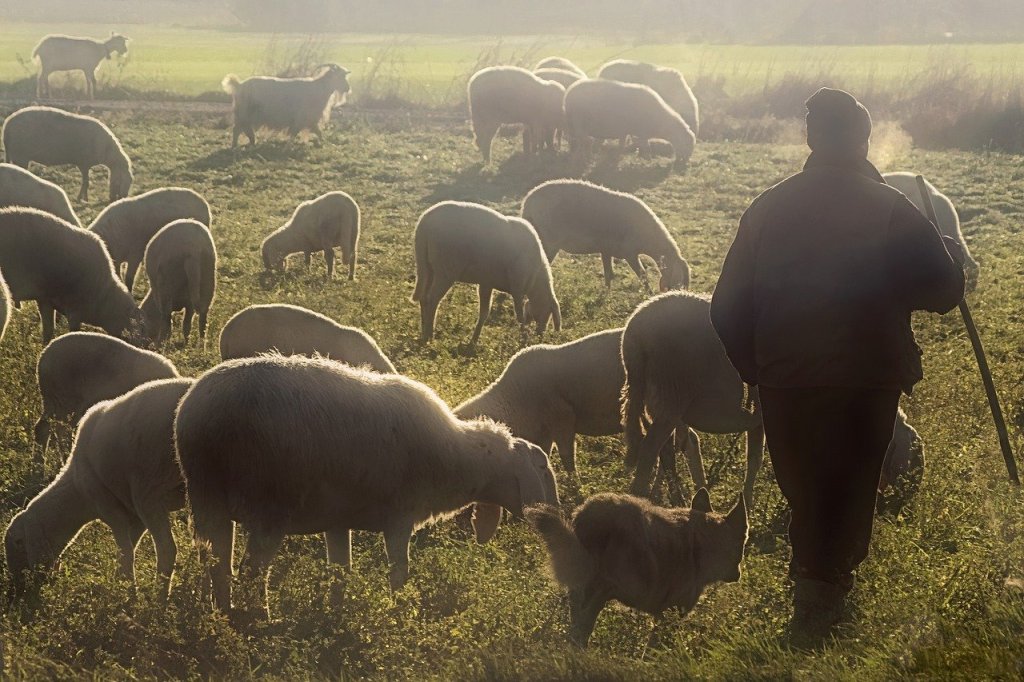
Sheep need to be protected. This is a fact that anyone who has been around then knows. If something else is not trying to kill them, then they are trying to injure themselves. Few things can un-alive themselves in more creative ways than sheep.
The Bible tells us that Christ is the shepherd of his sheep. He also puts others in place to protect the flock. The word “Pastor” has taken on religious tones, but our English word comes from the Latin “pastor, “meaning a shepherd. The language of the earliest Christians and the Eastern Church was Greek. There, the word for shepherd was poimen (ποιμήν). When scripture speaks of pastors, it speaks of shepherds. We are commanded to shepherd the flocks under our care. Paul does this in Acts 20:28 and Peter in 1 Peter 5:2. Of course, each command’s context tells us the elders fill this role. I don’t want to get into a debate about eldership: Who can be an elder? How many elders must a church have? Is there a difference between a pastor and an elder? I want to concentrate on our role of being shepherds. For the rest of the discussion, I’ll stick with Pastor instead of Elder because it is more widely used.
Being a shepherd means we protect the sheep, provide for the sheep, and discipline the sheep. Psalm 23 gives us a beautiful picture of being part of the loving shepherd’s flock. David spoke of his actions as a boy to protect his family’s sheep. The prophet spoke of the sheep being scattered when the shepherd was struck.
A shepherd is vital because many opponents would take or destroy the sheep. Whether two-legged or four, predators want the sheep. Shepherding a church is no different. Some would scatter the flock (the church) or undermine the faith of the individual sheep. Some may want to draw away the flock after themselves. Even Paul faced such opponents. Some want to draw the sheep into sin. Some seek to convince the sheep of their doctrinal errors. Christ protects the church directly through the Holy Spirit. But he has also placed under-shepherds (pastors) in the church. Christ works through these to protect his sheep.
Recently, I have been studying John 10. There, Jesus talks about the good shepherd (himself). He says that a good shepherd protects the sheep when attacked. He says that a hireling runs and saves himself (vv 12f). This got me thinking about a common problem in small churches. There is a tendency to “sense a call from God” to leave when trouble comes. Attacks and trouble will come. But trouble itself is not a reason to leave. It might be the opposite. It could be that the attacks mean we are to stay. In 1 Corinthians 16:8f, Paul says he planned to stay longer in Ephesus because a great door had opened to him. He goes on to say that he also faces much opposition. Now, the conjunction between these two is καὶ, which can be “and” or “but.” One use of this conjunction is to show that the second clause results from the former. If this is how Paul meant it, and I believe he did, then he is saying the open door has resulted in opposition. This makes perfect sense to me. Paul did not see opposition as a reason to flee. Quite the opposite. He often had to be convinced to leave such places.
The enemy is going to attack. And going back to my paragraph on Sam Sheepdog and Ralph Wolf, many of these attacks will come from those we think are friends. We, like Sam, can be blind to these until they become apparent. We want to believe in the best of everyone. We don’t want to consider that the person we have poured our heart into could break it. We can’t imagine a friend spreading rumors about us. We may even refuse to see it. But when it becomes apparent, it can shatter us. In such times, we may start looking for a reason to leave.
When I served in the Army, we used to say that the best unit was always the one you came from or the one to which you were going. The one where you currently served was always the worst place in the Army. We pastors may do the same when stress and struggles hit us. “Oh, this church is awful. My next church will be better.” It can be easy to place our hopes for ministry success in finding the right church. If I leave here, I can escape the attacks of the enemy. But we should look at what Jesus called this. This is the action of the hireling. Yes, you read that right. The one thing no pastor wants to be—a hireling—one who serves for money. “But wait! I’m no hireling!” Sorry. I’m simply repeating what Jesus said in John 10:12-13. I am sure you don’t like this. When I read it, I was thinking about leaving my ministry. It was like a kick in the teeth. It became evident to me that I was to stay. I will not be a hireling. I’m sure you are not one either.
When attacks happen, they are allowed by God. They teach us. They make us better ministers. They mature our people. We know this. But during the moment, it is hard to keep this in mind. We want relief. We want them to end. It is easy to decide the best course of action is to leave. It is easier to convince ourselves that it is not our selfishness or fears driving us but the will of God—the same will we all find difficult to discern.
Am I saying there is never a time to leave? Of course not. There are times to go. And when it is evident that God is moving us, we must move. What I am saying is that we should not spiritualize our weaknesses. We must be sure. I think when a church is attacked, more often than not, the pastor should defend the church and stay close to the flock. I am looking into a mirror by writing this.
Pastor, if you are facing attacks, and some are seeking to destroy you or your people, perhaps God is telling you to plant your feet firmly, spit on your hands, and wield “the weapon of our warfare.” Do battle on behalf of your people since that is your calling. A shepherd is a warrior for the flock—a spiritual warrior, but a warrior nonetheless.

 Little Church Big Heart
Leave a comment